
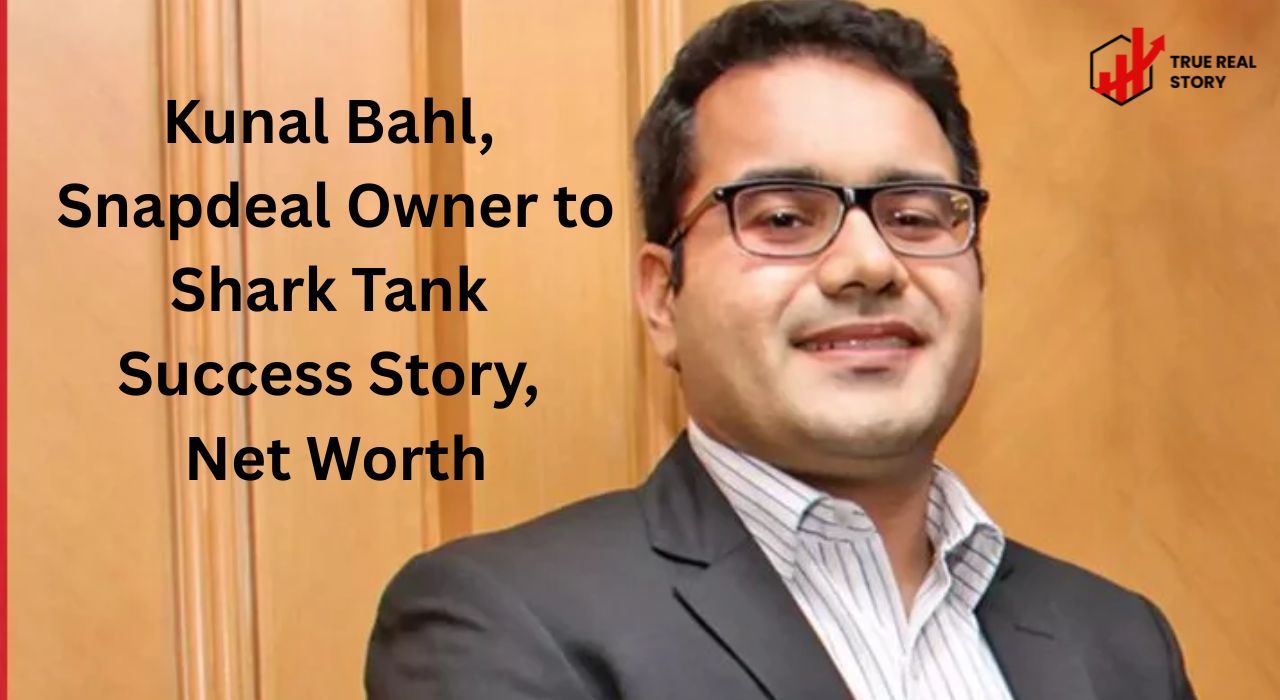
India's startup environment has seen several success stories, however few journeys are as realistic, detailed, and instructive as that of Kunal Bahl. Kunal Bahl, best known as the Snapdeal founder and owner, is more than simply an entrepreneur who achieved early success; he is someone who suffered public failures, severe competition, and industry mistrust before making a remarkable comeback as an investor and corporate leader.
This article delves into Kunal Bahl's identity, education, age, wife, businesses, failures, comeback strategy, role on Shark Tank, and estimated net worth of ₹3,500 crore, according to the Times of India. It is a complete, fact-based success story for entrepreneurs, students, and business experts.
Kunal Bahl is an Indian entrepreneur, investor, and startup advisor best known for creating Snapdeal. He is also the co-founder of Titan Capital, one of India's most active early-stage venture capital firms.
Over the years, Kunal Bahl has progressed from a startup founder to a serial entrepreneur and investor who has invested in hundreds of Indian firms in the technology, consumer, fintech, SaaS, and healthcare sectors.
Today, many people identify him as Kunal Bahl from Shark Tank India, where he serves as a judge (shark), mentoring and investing in bright startups.

Full Name: Kunal Bahl
Date of Birth: January 1, 1984
Kunal Bahl Age (2025): 41 years
Birthplace: New Delhi, India
Kunal Bahl grew up in a business-friendly atmosphere that valued ambition and global exposure. He traveled overseas for education at a young age, which helped develop his entrepreneurial mentality.
Kunal Bahl education is frequently cited as an important component of his success.
He finished his education in India. He eventually moved to the United States. He received further education at the University of Pennsylvania, focusing on entrepreneurship and business-related subjects.
During his undergraduate years, he developed a strong interest in startups, technology, and worldwide business models.
Interestingly, unlike many conventional career routes, Kunal Bahl opted for entrepreneurship over a corporate position, a choice that carried huge risk but eventually paid off.
The story of Snapdeal founder Kunal Bahl begins in 2010. Snapdeal was not originally an e-commerce marketplace. It began as a daily bargains and coupon service, inspired by global models such as Groupon.
Founded in 2010.
Co-founder: Rohit Bansal.
At the time, India's online market was still in its infancy. Online purchasing was not common, infrastructure was poor, and digital payment options were restricted. Nonetheless, Kunal Bahl recognized tremendous potential.
Snapdeal's ascent to becoming an e-commerce powerhouse. Snapdeal owner Kunal Bahl and his team realized the constraints of the deals strategy and transformed Snapdeal into a full-fledged e-commerce platform.

During its peak years:
Snapdeal has risen to become one of India's top three e-commerce platforms, competing closely with Flipkart and Amazon. The business garnered global investors and received billions in cash.
Snapdeal's revenue climbed dramatically as millions of merchants and buyers joined the platform. Snapdeal was worth several billion dollars at its peak, representing the growth of Indian consumer internet firms.
No honest Kunal. Bahl's success story is complete without mentioning failure.
Intense competition: Amazon and Flipkart have made substantial investments in logistics and discounts.
Operational concerns included the challenges of maintaining quality control and seller experience.
Cash Burn: Increased marketing and discount spending put a strain on finances.
Merger negotiations fail: A planned merger with Flipkart did not materialize.
Snapdeal lost market share over time, and public attitude went from praise to uncertainty. Many dubbed Snapdeal a "failed startup," and criticism was widespread.

Unlike founders who flee after failure, Snapdeal owner Kunal Bahl embraced reality and adjusted.
Instead of clinging to pride or outdated strategies:
Snapdeal was reduced and restructured.
The focus moved to value-commerce.
Non-core assets were sold.
This phase showed that failure did not define Kunal Bahl—it refined him.
Read More Stories:
Radhakishan Damani Net Worth, DMart Story
Following Snapdeal's reorganization, Kunal Bahl concentrated more on Titan Capital, his investment firm. Titan Capital has invested in over 250 startups. The portfolio consists of businesses in the fields of fintech, SaaS, healthtech, and consumer tech.
Known for supporting early-stage entrepreneurs, this strategic change represented Kunal Bahl's return as a visionary investor driving India's startup ecosystem.

After his appearance on Shark Tank India, Kunal Bahl became immensely well-known.
The Importance of His Presence
He has firsthand experience of both success and failure.
Concentrates on long-term development rather than hype
Provides helpful counsel to founders.
Kunal Bahl is regarded as a Shark Tank judge for his composed demeanor, reasonable inquiries, and long-term perspective.
The Times of India states that:
As of late 2025, Kunal Bahl Net Worth is ₹3,500 crore
around $420 million in USD value
The net worth of Kunal Bahl in rupees
His riches are derived from:
Equity at Snapdeal
Titan Capital Investments
long-term investments and startup exits
In spite of market fluctuations, Snapdeal founder Kunal Bahl's net worth in rupees reflects his diverse business approach, which is not dependent on a single firm.
Kunal Bahl wife is Naina Bahl, a business owner and the company's founder. She established Veda & Co, a premium lifestyle and home design business. The pair lives a rather secluded existence.
They are frequently referred to as a power couple in India's entrepreneurial sector.
Kunal Bahl often brings up in interviews that he believes in striking a balance between aspiration and one's own values.
Kunal Bahl is associated with Snapdeal in addition to the following:
Titan Capital
Investments in consumer technology, SaaS businesses, and fintech
Positions of advice in new businesses
Long-term thinking, risk management, and diversification are all reflected in the Kunal Bahl company ecosystem.
Business Philosophy and Leadership Style
Kunal After Snapdeal, Bahl's leadership underwent a major transformation.
Fundamental Principles
His attitude makes his journey especially useful for businesspeople today.
Not a verdict, but feedback, is what failure is.
Turning is a strength, not a weakness.
Ideas are just as important as timing and implementation.
Aggressive expansion is not as effective as sustainable growth.
Over the course of decades, not funding rounds, true success is achieved.
Read More Stories:
Sachin Bansal and Binny Bansal Flipkart Success Story
Kunal Bahl's experience stands out in an era where startup culture tends to glorify only success since it illustrates the entire cycle: rise, fall, and return.
He stands for:
Resilience
Adaptability
Leadership maturity
His story is about lasting influence rather than instant fame.
The tale of Kunal Bahl, the proprietor of Snapdeal, is one of bravery, discovery, and transformation. His journey, which includes creating one of India's largest e-commerce sites, overcoming industry obstacles, and becoming a well-known investor and Shark Tank panelist, teaches us important lessons.
Kunal Bahl's success is not only measured by his projected net worth of ₹3,500 crore; rather, it is also determined by his impact, knowledge, and contribution to the Indian startup community.
His tale makes one thing quite apparent to would-be business owners: success is not about never failing; it's about never giving up.
If you have your own story to inspire others, share now for free with TrueRealStory.com
Kunal At the moment, Bahl is an entrepreneur and investor. On Shark Tank India, he serves as a judge and is the co-founder of Titan Capital, which actively invests in new businesses.
The precise amount of the CEO's salary at Snapdeal is not made public. The specifics of executive compensation are typically kept confidential and fluctuate depending on the firm's performance each year.
Kunal, yes. In Indian rupees, Bahl is thought to be worth a billion. According to the Times of India, his estimated net worth is ₹3,500 crore, or about USD 420 million.
Along with Rohit Bansal, Kunal Bahl is the co-founder and main head of Titan Capital. The company functions more like an investment partnership than a typical CEO-led firm.
Radhakishan Damani is not one of the judges on Shark Tank India. With a net worth of ₹3,500 crore, Kunal Bahl ranks among the wealthiest in the group, which also includes Aman Gupta and Peyush Bansal, according to publicly accessible information.
Although he wasn't completely done with acting, Kunal Kapoor chose his parts carefully. Along with the odd movie assignment, he began to concentrate on creative writing, business, and his own interests.
Snapdeal is, in fact, still running. It serves primarily to thrifty consumers in India as a value-oriented e-commerce site.
Over the years, Snapdeal's losses have decreased significantly. Recent reports point to a more regulated and sustainable business model, even though it suffered significant losses during the height of the competition.
Due to severe competition from Amazon and Flipkart, Snapdeal's market share declined. In order to stay in business, it later reduced its size, reorganized its operations, and switched to a more streamlined value-commerce model.