
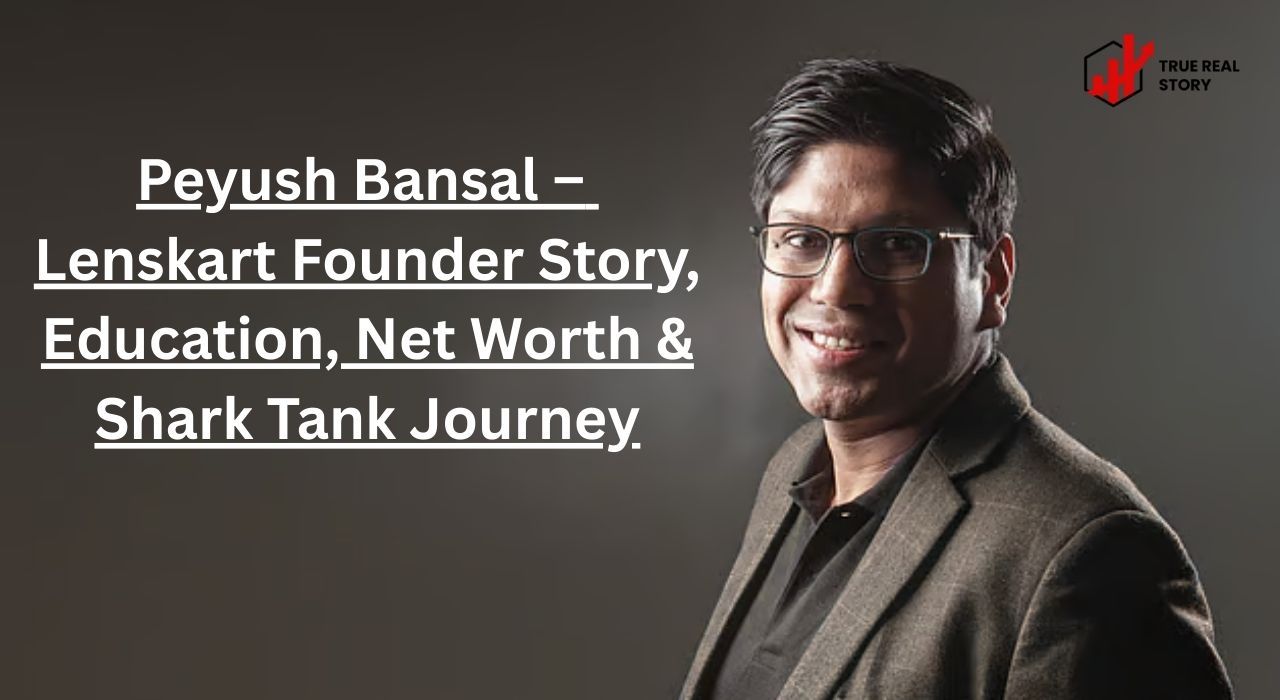
India's startup environment has generated many great entrepreneurs, but Peyush Bansal, the
founder of Lenskart, stands out for transforming a conventional, fragmented eyewear industry into a technology-driven consumer brand. His transition from a corporate position at Microsoft to establishing one of India's most valuable omnichannel retail firms is a classic example of vision, execution, and perseverance.
This comprehensive blog details Peyush Bansal's age, schooling, net worth, wife, stake in Lenskart, and whole professional path, providing a thorough insight into how Lenskart became a household brand.
Peyush Bansal is an Indian entrepreneur who founded and serves as CEO of Lenskart, India's largest eyewear business. He is also largely regarded as one of Shark Tank India's most esteemed judges, with his astute commercial knowledge and founder-first approach motivating millions.
Full Name: Peyush Bansal
Profession: Entrepreneur, investor.
Known for: Lenskart Founder and CEO
Nationality: Indian
Peyush Bansal exemplifies a new breed of Indian entrepreneurs that blend global exposure, data-driven decision-making, and a thorough knowledge of Indian customers.
According to recent public information, Peyush Bansal age is 40 years. He was born and reared in New Delhi, India, in a middle-class family that emphasized education and discipline.
Peyush had a strong affinity for science, arithmetic, and problem-solving since he was a child, talents that would subsequently play an important role in his entrepreneurial journey.

Peyush Bansal education background is a major contributor to his success.
Bachelor's degree in electrical engineering.
Institution: McGill University, Canada.
Studying at McGill provided Peyush with worldwide exposure and analytical abilities, allowing him to think outside the box when it comes to conventional Indian business strategies. His education was instrumental in developing his technology-first and consumer-centric approach.
After graduating from college, Peyush Bansal began his professional career with Microsoft in the United States.
Microsoft Experience.
Responsibilities included software and product-related duties.
Provides financial security, prestige, and opportunity.
Peyush, on the other hand, quickly saw that a corporate career, no matter how successful, was incompatible with his ultimate aim of creating something significant in India. He made the
courageous decision to resign from Microsoft and return home.
This decision represents the turning point in Peyush Bansal's success story.
Before Lenskart, Peyush Bansal dabbled with other entrepreneurial concepts, including internet marketplaces for job postings and digital services. While these efforts did not grow as planned, they taught him important lessons about:
Indian Consumer Behavior
Execution Challenges
Importance of product-market fit
These early failures paved the way for his greatest success, Lenskart.

Identifying the Problem
Peyush remarked that eyewear in India was:
Expensive
Largely unbranded.
Difficult to access
Lacking consumer confidence
Despite being a basic healthcare need, eyeglasses were not consumer-friendly.
Peyush Bansal co-founded Lenskart in 2010 with the goal of providing cheap and fashionable spectacles directly to consumers.
Core Idea:
Use technology to make excellent eyewear accessible, inexpensive, and convenient.
This vision eventually transformed India's optical business.
Lenskart's success is based on its hybrid omnichannel strategy.
Key Elements
Online platform for viewing and ordering
Offline eye testing and trial stores.
Home eye check-up services.
AI-powered face try-on technology
This integrated strategy allowed Lenskart to grow swiftly while maintaining consumer trust.
Read More Stories:
Kunal Bahl, Snapdeal Owner to Shark Tank Success Story
Phase 1: Online Validation
Competitive pricing.
Transparent return policies.
Customer-centric design
Phase 2: Offline Expansion
Physical shops in Tier 1, 2, and 3 cities
Increased Accessibility
Phase 3: Technology and Brand Development
AI &; Data Analytics
Celebrity endorsements
Focus on private labels.
Lenskart currently operates thousands of outlets and serves consumers throughout India and foreign countries.

Peyush Bansal Net Worth acc. to forbes.com
Estimated at ₹600 crore.
Figures vary based on market conditions and valuation changes.
Peyush Bansal Net worth in rupees
Approximately ₹6,000 million
His fortune is mostly derived from:
Equity stake in Lenskart
Strategic investments
Brand equity and leadership positions
Peyush Bansal stake in Lenskart remains substantial, making him one of the company's largest individual stockholders.
His continuing ownership ensures:
This significant founder stake is a crucial reason why investors believe the company's management.
Lenskart Founder: Peyush Bansal
Lenskart. Owner: Peyush Bansal, co-founders, and investors.
While Lenskart has numerous stakeholders, Peyush remains the company's face, vision-carrier, and operational leader.
Peyush Bansal's wife wants to stay out of the public eye. Peyush Bansal wife is Nidhi Bansal. They were married in 2011. Unlike many celebrity entrepreneurs, Peyush keeps his personal life private and instead emphasizes his public encounters on work and entrepreneurship.
This balanced approach reflects his conviction in:

Peyush Bansal became well-known after he took on the role of a judge on Shark Tank India.
Why He Stands Out
Practical guidance
Deals that favor founders
Focus on long-term goals instead of just trends
His role on the show has:
Motivated young business owners
Enhanced the image of Lenskart
Established him as an expert in the field
Peyush Bansal’s way of leading is characterized by:
An obsession with customers
Making decisions based on data
Thinking ahead for the long term
Striving for excellent operations
He asserts that successful brands are created by addressing real issues rather than merely seeking high valuations.
Peyush Bansal’s journey to success was not without trials:
Difficulties in securing initial funding
Building trust with consumers in online eyewear shopping
Complicated supply chain issues
Expanding physical stores
Each obstacle helped to solidify the company’s foundations.
Identify Real Consumer Problems
Peyush Bansal found success by addressing true challenges in India’s eyewear industry—unaffordable prices, lack of accessibility, and trust issues.
Education Builds Strong Foundations
His engineering background allowed him to adopt a business strategy that prioritizes data and technology.
Corporate Jobs Are Not the Final Destination
Leaving a secure job at Microsoft demonstrated that taking calculated risks is necessary for creating impactful businesses.
Failures Are Valuable Teachers
Early mistakes in startups refined his grasp on product-market fit and how to execute effectively.
Technology Is a Growth Multiplier
Lenskart’s application of AI, multi-channel retailing, and automation sped up growth and built consumer trust.
Founder Control Matters
Keeping a significant ownership stake in Lenskart allowed Peyush Bansal to prioritize long-term goals instead of short-term profits.
Customer Trust Drives Brand Success
Clear pricing, hassle-free returns, and quality guarantees fostered enduring loyalty among consumers.
Think Long Term, Not Quick Wins
Focusing on sustainable growth and building a brand is more important than just going after quick profits.
Read More Stories:
Radhakishan Damani Net Worth, DMart Story
Gautam Adani Biography & Success Story
By leaving Microsoft to launch a billion-dollar business, Peyush Bansal shows that:
Success stems from bravery, clarity of purpose, and consistency.
His story resonates with many Indians aspiring to be entrepreneurs.
The narrative of Peyush Bansal, the founder of Lenskart, is a contemporary Indian success tale grounded in education, risk-taking, innovation, and determination. His skill in merging technology with a deep understanding of consumer needs has transformed eyewear shopping in India.
As Lenskart continues to expand globally, Peyush Bansal’s impact on the startup scene in India will grow even more—making his journey one that deserves to be studied, shared, and celebrated.
No, Peyush Bansal is not an IIT graduate. He earned his engineering degree from McGill University in Canada. Even though he is not an IIT alumni, his international education and practical experience significantly contributed to Lenskart's success.
Peyush Bansal’s net worth is estimated to be around ₹600–700 crore, mainly from his shares in Lenskart, investments, and the long-term value he creates as the company continues to expand.
Based on publicly available information, Peyush Bansal is wealthier than Aman Gupta. The higher valuation of Lenskart and Peyush’s substantial ownership make his net worth greater than that of Aman Gupta, who is the co-founder of boAt.
Among the judges on Shark Tank India, Radhika Gupta and Peyush Bansal are often thought to be the wealthiest, taking into account their company values and properties. The specific rankings might change because of private investments and changing values of startups.
Lenskart frequently offers special deals or free services when customers make their first purchase, such as complimentary eye exams or shipping, based on current promotions. However, these offers may vary by location, advertising campaigns, and platform rules.
The salary of Peyush Bansal, the CEO of Lenskart, is not made public. Similar to many founders of startups, his main income is derived from owning shares, long-term growth in company value, and bonuses related to performance rather than just a fixed pay.
Lenskart functions as both a business and a well-known consumer brand. It operates as a private business and is one of the leading eyewear brands in India, selling products through online channels and physical stores.
Lenskart is an Indian business that has its main office in Gurugram, India. Although it may collaborate with international partners for some manufacturing or supply-chain needs, it is not a Chinese company and is founded and managed from India.